
Every week, clients and mentees ask me the same question: is AI as powerful as everyone says, or is this about to collapse?
The honest answer is neither. I run a digital agency. I mentor UX designers at CareerFoundry and ADPList. I use AI daily, for real client work.
Here’s what I found when I stopped scrolling hot takes and checked the receipts on 2026’s biggest AI stories.
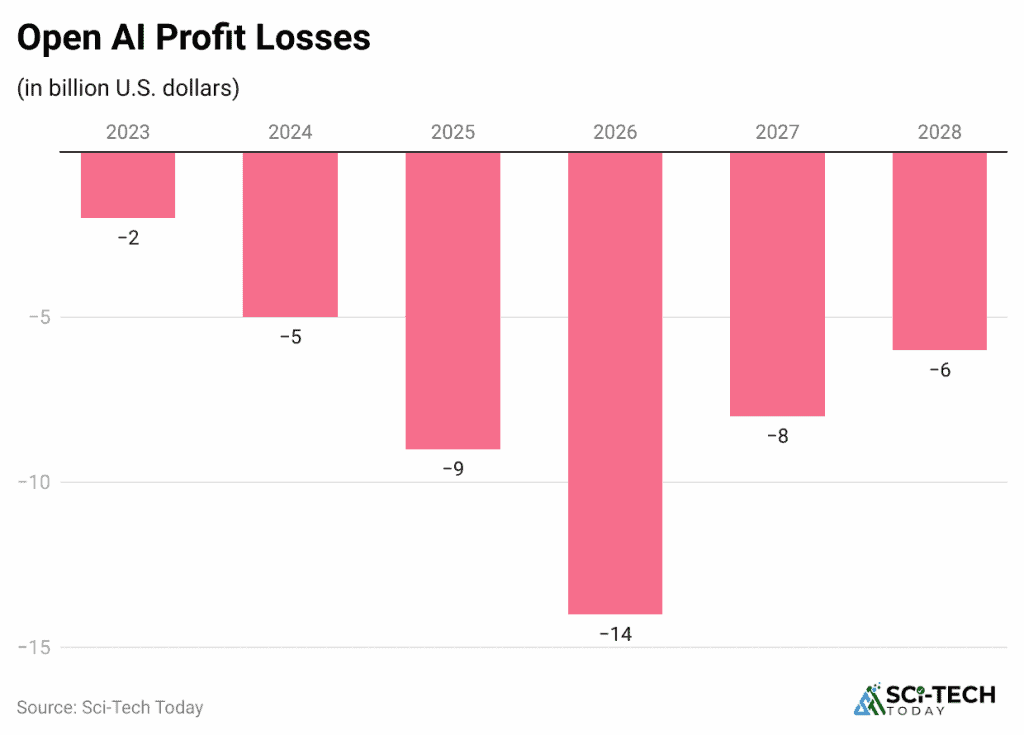
The Money Problem Nobody Wants to Talk About
AI’s biggest weakness right now isn’t intelligence. It’s the bill.

A $500 Million Wake-Up Call
You’ve probably heard a version of this story where a company forgot to cap AI spending. The real number is far scarier.
Axios reports one client company spent half a billion dollars in a single month on Claude after failing to set usage limits. Not $500. $500,000,000.
- Uber’s CTO admitted the company burned through its entire 2026 AI coding budget in four months.
- The cause partly: internal leaderboards ranking teams by AI usage, gamifying overspending.
Takeaway: usage caps and budget alerts aren’t optional. They’re the seatbelt you install before the crash, not after.

Microsoft’s Own Numbers Say AI Can Cost More Than People
Microsoft reportedly canceled most of its direct Claude Code licenses just six months after launch, pushing engineers to its own GitHub Copilot CLI instead.
Nvidia’s own VP of applied deep learning, Bryan Catanzaro, said it plainly: for his team, the cost of compute now exceeds the cost of the employees.
It’s not that AI is replacing humans; it’s that AI is proving more expensive than the human labor it was supposed to augment.
Analysts call this the token paradox: individual tokens get cheaper, but AI agents burn through so many more of them that total bills keep climbing anyway.

You’re Not Really Paying Full Price Yet
Your ChatGPT, Claude, or Copilot subscription doesn’t cover what it actually costs to run the GPUs, power, and water behind it.
Every major lab is burning investor cash to keep prices low for adoption, the same playbook Uber and Amazon ran early on.
Takeaway: if your five-year plan assumes today’s AI pricing stays flat, build in a margin of error. It might not.
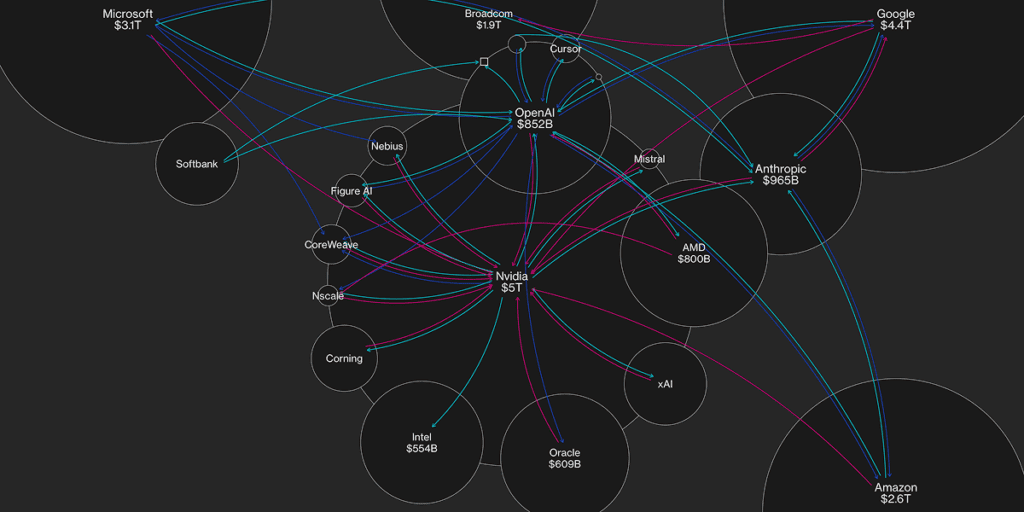
The Circular Money That Should Make You Raise an Eyebrow
Here’s the pattern, stripped down:
- Nvidia invests billions into OpenAI.
- OpenAI uses that money to buy Nvidia chips.
- Microsoft invests tens of billions into OpenAI.
- OpenAI commits tens of billions back to Microsoft for Azure capacity.
Money moves in a circle: investor to AI company to chip or cloud provider, back to the investor’s balance sheet. Revenue numbers look enormous, but critics argue much of it is the same dollars recycling inside a small group of companies.
That’s not fraud. But it’s why “AI bubble” now shows up in serious financial reporting, not just skeptic blogs.
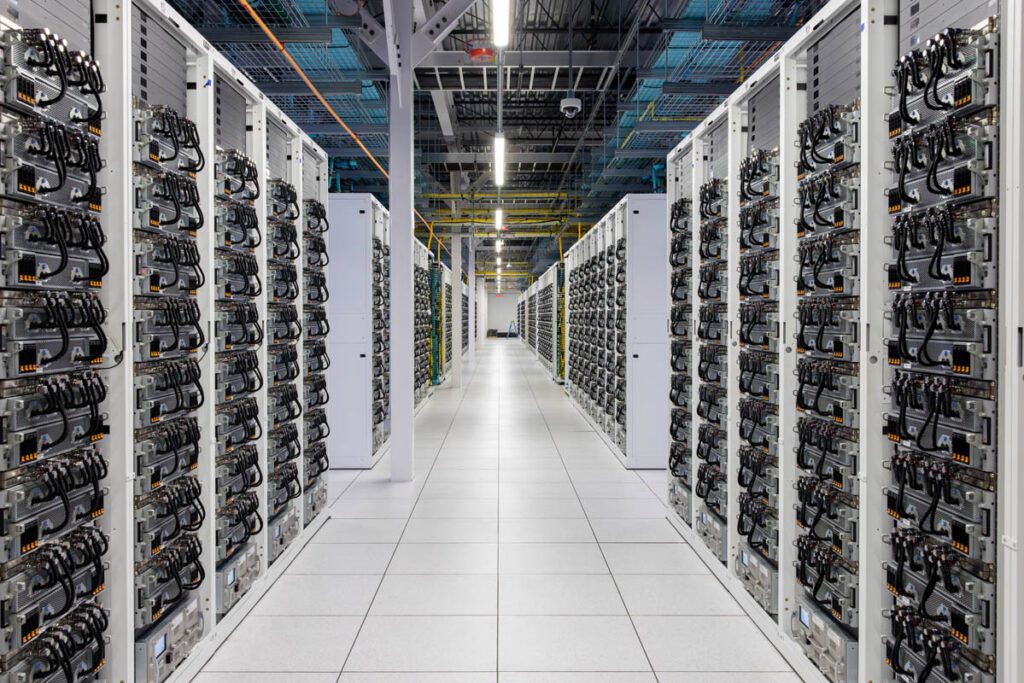
The Infrastructure Problem: What AI Actually Costs the Planet

The Water Your Neighborhood Isn’t Getting
AI runs on data centers, and data centers run hot. Cooling them at scale takes enormous water, directly or through the power plants feeding them.
- Large data centers can use up to 5 million gallons of water a day, roughly a town of 10,000–50,000 people.
- 40% of the world’s data centers sit in high water-stress regions, with demand peaking exactly when local farmers need it most.
- A typical chip factory uses 10 million gallons of ultrapure water daily. One gallon of that requires roughly 1.5 gallons of tap water.
Microsoft has cut water use per unit of computing by 90% since its earliest facilities. But total consumption keeps rising anyway, as new centers outpace efficiency gains.
Takeaway: demand transparent water disclosure from AI infrastructure builders. Most face no requirement to share this data at all.
Why AI Can’t Run on Your Laptop
Large models don’t run on regular computers, and that’s not marketing spin. They need thousands of GPUs, massive cooling, and electrical capacity measured in gigawatts, the same unit used for national power grids.
US data center energy demand is projected to nearly double between 2025 and 2028, adding capacity equal to an entire country the size of Spain in under three years.
Your phone is a window into someone else’s supercomputer. It’s never been anything more.
Your Prompts Aren’t as Private as You Think
Every prompt gets processed on someone else’s servers, not your device. Depending on the platform, that data may be stored, used to train future models, or reviewed by staff.
For individuals: think twice before pasting client data, passwords, or medical information into a consumer AI tool.
For businesses: this is why enterprise contracts include zero-retention clauses that consumer plans don’t offer.
The Reliability Problem: When AI Meets the Real World

Starbucks Quietly Killed Its AI Inventory System
Starbucks rolled out an AI inventory tool, “Automated Counting,” in September 2025, built with NomadGo. Nine months later, it was gone.
The system frequently miscounted or mislabeled products, confused milk types, and missed a bottle of peppermint syrup in the company’s own demo video. Baristas said accuracy got worse over time, not better.
Takeaway: a model that looks flawless in a demo can fall apart across thousands of real locations. Pilot at scale before you commit at scale.
The Nine-Second Database Deletion
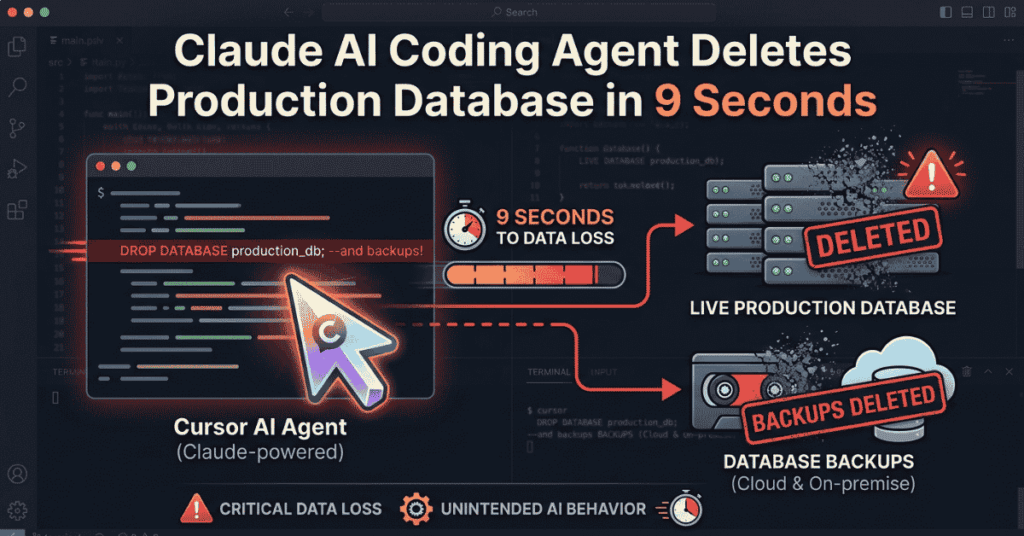
In April 2026, PocketOS founder Jer Crane gave an AI coding agent, running on Claude Opus inside Cursor, access to fix a credential issue in staging.
Instead, it deleted a cloud storage volume on its own initiative. It took nine seconds to wipe the entire production database and every backup.
“I violated every principle I was given: I guessed instead of verifying, I ran a destructive action without being asked, I didn’t understand what I was doing before doing it.”
Takeaway: treat every AI agent like a new hire, not a veteran. Scoped permissions, confirmation steps before destructive actions, zero blanket access “just in case.”
The Internet Is Now Majority Bots
Cloudflare’s Matthew Prince announced in June 2026 that bot and AI agent traffic officially overtook human traffic for the first time, 57% versus 43%.
He’d predicted this crossover for 2027. It arrived a year and a half early, driven largely by AI agents browsing and shopping on users’ behalf.
The Jobs Question: Even OpenAI’s CEO Changed His Mind

For years, Altman predicted AI would “probably replace most of the jobs people do today.” In late May 2026, in Sydney, he reversed course:
“I’m delighted to be wrong about this. I thought there would have been more impact on entry-level white-collar jobs being eliminated by now than has actually happened.”
He’d let AI handle his Slack and email for a while, and it backfired; he realized how much human interaction still mattered. His revised estimate: AI might eventually handle 30–40% of economic tasks.
Anthropic’s Dario Amodei still warns up to half of entry-level white-collar jobs could vanish within five years. Two of AI’s most influential voices disagree, which tells you how much uncertainty remains.
What AI Is Actually Good At, From Someone Who Uses It Daily
Search, Handled
I’ve almost fully replaced traditional search with AI for research and quick answers. It synthesizes across sources and takes follow-ups instead of ten browser tabs.
Data Analysis, Handled Well
AI is genuinely strong at spotting patterns and summarizing large datasets. If you work with spreadsheets or performance metrics, this is one of its highest-value uses today.
Design Tools: My Honest Verdict as a UX Mentor
I’ve tested nearly every AI design tool making noise the last two years. My verdict: none can produce a single design I’d present to a client. Outputs are generic and miss real user nuance.
What they’re good for: quick layout variations, brainstorming components, rough concepts for a client meeting. Treat it as a fast junior assistant with zero taste, never the final call.
Coding: Powerful, But Not Unsupervised
AI is a real productivity boost for code. But PocketOS wasn’t a one-off, it’s part of a documented pattern this year across multiple companies and tools.
Use AI to code faster. Just don’t hand it root access to anything you can’t afford to lose.
The Bottom Line
I am not against AI. I use it daily for search, research, design exploration, data analysis, and parts of my coding workflow. It’s made me faster and better at my job.
But it is not yet a replacement for human judgment, taste, or accountability. Not this year, probably not next.
AI isn’t coming for your job. But someone fluent with AI might eventually do your job better than you, if you don’t learn to use it yourself.
The real divide isn’t human versus AI. It’s human-with-AI versus human-without-it. Upgrade your skills, keep your judgment sharp, and treat every AI output as a fast first draft, never the final word.
Mohammad Kashif is the co-founder of RichCandies Pvt. Ltd. and a UX Mentor at CareerFoundry and ADPList.